
Carbotech Manufacturing | Metal Fabrication in Roebuck, South Carolina
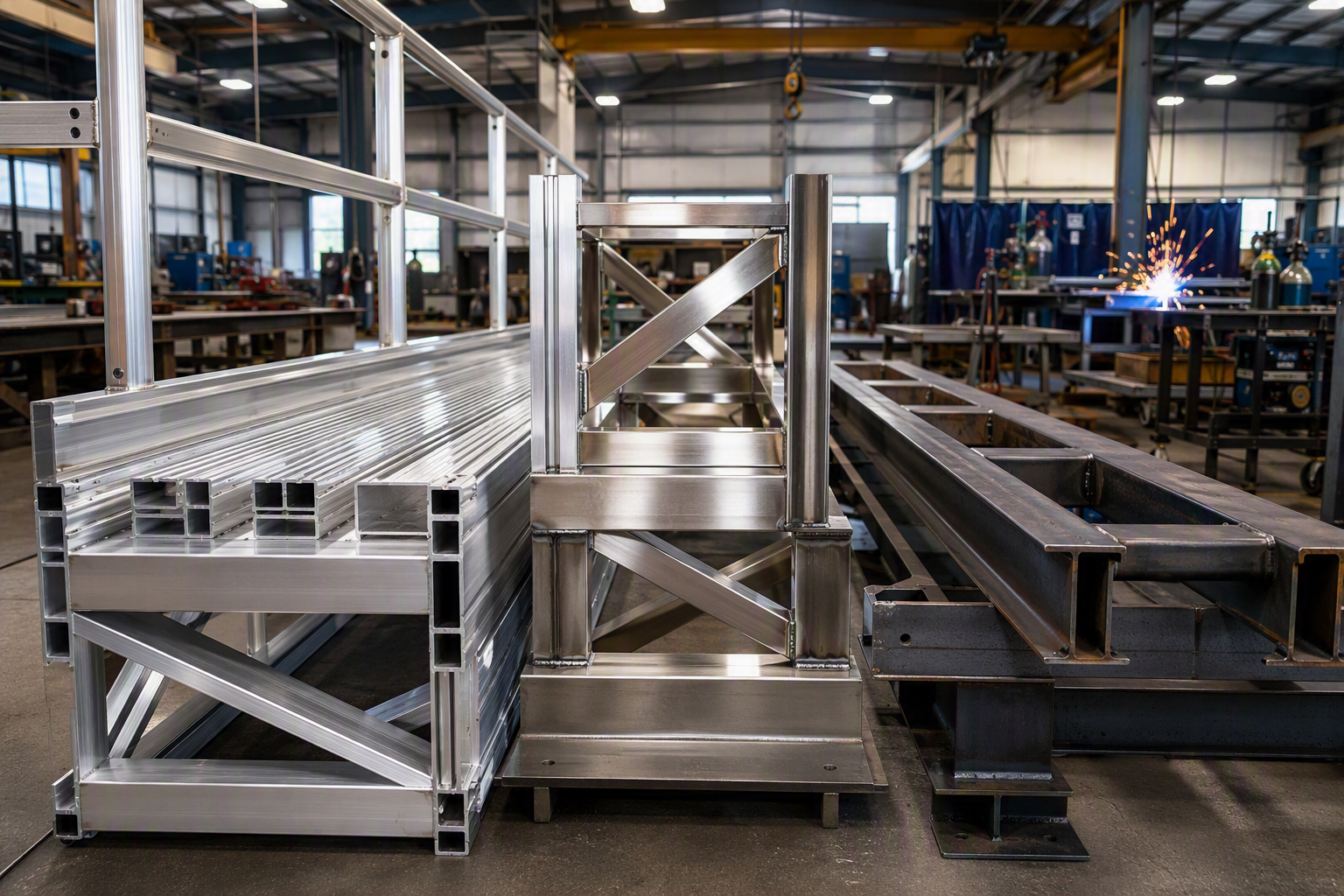
The metal chosen for an industrial platform or support affects how it carries load and handles its environment. It also affects handling and installation. Aluminum, stainless steel, and mild steel each answer those questions differently.
This article compares aluminum, stainless, or mild steel for industrial platforms. It uses the factors a fabricator weighs at drawing review. Carbotech Manufacturing is a full-service metal fabrication shop in Roebuck, South Carolina, cutting, welding, machining, assembling, painting, and inspecting in one 14,000 square foot building.
Four Factors Behind the Material Choice
Carbotech Manufacturing names four factors that usually decide material on structural work: load, corrosion exposure, weight, and washdown requirements. The shop discusses them at drawing review rather than assuming the specified material is the right fit.
Load. Platforms, supports, and framing carry weight, and the engineered drawing sets what each member must hold.
Corrosion exposure. Moisture, chemicals, and outdoor conditions affect how a metal performs over time.
Weight. Member weight matters when a structure gets handled, installed, or supported by other equipment.
Washdown. Areas cleaned with water or chemicals place added demands on both material and finish.
Should an industrial platform be aluminum or steel?
An industrial platform’s material depends on load, corrosion exposure, weight, and washdown requirements. The engineer of record’s drawing governs the final choice. Carbotech Manufacturing in Roebuck, South Carolina fabricates platforms and supports in aluminum, stainless steel, and mild steel. The shop discusses material at drawing review before quoting.
Why Aluminum Alloy Matters
Aluminum is not one material. The Aluminum Association explains that adding elements such as magnesium, silicon, or zinc changes the metal’s strength, density, workability, and resistance to corrosion. Its registry now holds more than 530 active alloy compositions.
Two alloy families stand out in the association’s descriptions for structural and outdoor work. The association ranks 6xxx extrusions as the preferred option for architectural and structural uses. It credits that family with strong formability, weldability, and corrosion resistance, plus strength that heat treatment can raise.
The 5xxx family relies on magnesium. The association notes it offers moderate to high strength, welds well, and resists corrosion in marine settings. Those traits explain its use in construction, storage tanks, and marine applications. Not every family suits outdoor exposure, though. The association notes the copper-based 2xxx series resists atmospheric corrosion less well than many alloys, so it is usually painted or clad for that exposure.
Which aluminum alloys are used for structural work?
The Aluminum Association identifies 6xxx series extrusions as the preferred option for architectural and structural uses. Alloy 6061 is the most widely used in that family. The magnesium-based 5xxx series offers moderate to high strength, welds well, and resists marine corrosion. It appears widely in building and construction.
Stainless and Mild Steel in the Same Shop
Stainless steel and mild steel complete the comparison. The grade for either depends on what the engineer specifies for the application. Carbotech’s welders cover all three metals, and plate, sheet, and structural sections run through the same Roebuck shop.
Keeping material decisions and fabrication under one roof lets the question get settled before cutting. Carbotech keeps cutting, drilling, welding, assembly, and paint in one building and checks members against the drawing before shipment.
Buyers planning structural steel fabrication can also review who owns what between the engineer of record and the fabricator. Related reading covers structural steel prices in 2026 and industrial platform guardrail requirements.
Frequently Asked Questions
How do washdown requirements affect platform material?
Washdown requirements are one of four factors Carbotech Manufacturing weighs when choosing platform material. The other three are load, corrosion exposure, and weight. The right metal can depend on the cleaning method, the chemicals involved, and the engineered drawing. That is why material choice belongs at drawing review rather than after fabrication starts.
What filler alloy is used to weld 6xxx series aluminum?
The Aluminum Association lists alloy 4043 among the most common filler alloys for welding 6xxx series aluminum in structural and automotive work. The 4xxx family adds silicon, which lowers the melting point without making the metal brittle. That combination suits welding wire and brazing alloys.
Who fabricates aluminum and stainless steel platforms in Spartanburg County, SC?
Carbotech Manufacturing fabricates aluminum, stainless steel, and mild steel platforms in Roebuck, South Carolina. The plant sits at 129 Old Airport Road in Spartanburg County. The shop builds platforms, supports, and framing for industrial applications. The plant opened in 2023 as part of Carbotech Group, founded in Quebec in 1987.
Carbotech Manufacturing: One Floor, Every Operation
Carbotech Manufacturing cuts, welds, machines, assembles, paints, and inspects in one 14,000 square foot building in Roebuck, South Carolina. The plant opened in 2023 as the US operation of Carbotech Group, which has built log handling and wood processing equipment from Quebec since 1987.
Our Services Include:
- Custom Metal Fabrication: Aluminum, stainless, and mild steel, from single pieces through repeat runs
- Material Handling Systems: Conveyors, platforms, and handling equipment designed, built, painted, and installed by one team
Have a print or a bottleneck?
Send it over with material, quantity, and the date you need parts on the ground.
Related Articles
- Engineer of Record vs. Fabricator: Who Owns What in Structural Steel
- Structural Steel Prices in 2026: What Federal Data Shows
- Industrial Platform Guardrails: What OSHA Requires Before You Order Steel
Works Cited
The Aluminum Association. “Industry Standards.” The Aluminum Association, www.aluminum.org/standards. Accessed 15 Sept. 2026.
