
Carbotech Manufacturing | Metal Fabrication in Roebuck, South Carolina
Two roles shape structural steel before it reaches a site: the engineer who designs it and the fabricator who builds it. When a project team is unclear on where one role ends and the other begins, questions can surface late.
This article explains the engineer of record vs. fabricator split under the AISC Code of Standard Practice. Carbotech Manufacturing is a full-service metal fabrication shop in Roebuck, South Carolina, cutting, welding, machining, assembling, painting, and inspecting in one 14,000 square foot building.
What the AISC Code of Standard Practice Covers
The American Institute of Steel Construction publishes the Code of Standard Practice for Steel Buildings and Bridges, known as ANSI/AISC 303. AISC released the 2022 edition, ANSI/AISC 303-22, in late 2022. It replaced the 2016 version and is available as a free download.
The Code sets out trade practices for fabricating and erecting structural steel. Unless the contract documents set different terms, those practices govern the contract between the parties. According to AISC, the Code is adopted into the International Building Code by reference through the Specification for Structural Steel Buildings, known as AISC 360, and the Seismic Provisions for Structural Steel Buildings.
Who is responsible for structural steel connection design?
Under the AISC Code of Standard Practice, connection design follows one of three options. The engineer of record can design the connections, or provide details for an experienced steel detailer to select or complete. The third option delegates design to a licensed engineer working for the fabricator. The contract documents should show which option applies.
Why the Connection Option Matters to a Quote
The option changes what the fabricator prices. When the engineer of record designs every connection, the fabricator builds to finished details. When the engineer of record delegates design, connection engineering joins the fabricator’s scope. That scope needs to be clear before bidding.
Carbotech’s published role on structural work is to build to the engineered drawing. As the shop’s structural steel page puts it, the engineer of record works to the specification, and the fabricator builds what that engineer specified.
What drawings does a structural steel fabricator need?
A structural steel fabricator needs the stamped drawings, the connection details, and any project specification that applies. Member sizes, material, quantity, and the date steel needs to arrive belong in the same request. Carbotech Manufacturing in Roebuck, South Carolina reviews the drawing, connections, and load callouts before quoting structural steel fabrication.
Where Fabrication Quality Shows Up
According to Carbotech, most structural rejections trace to connection workmanship rather than the members themselves. Examples include undersized welds, poor fit-up that leaves gaps, missing bolt holes, and members cut short.
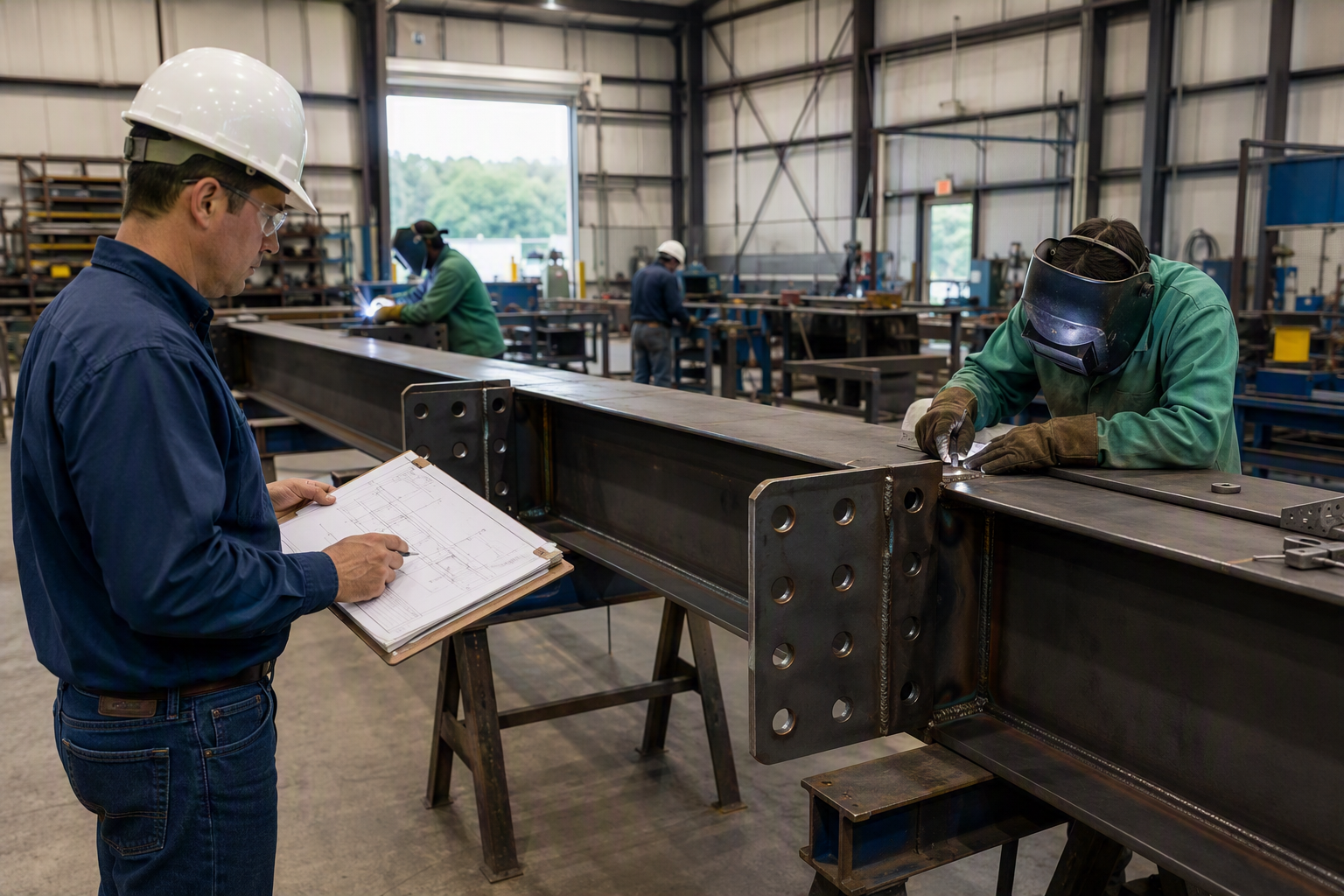
Carbotech keeps cutting, drilling, welding, assembly, and paint in one building. Mechanical and electrical engineers work on the same floor as the fabricators. The shop welds, assembles, and checks members against the drawing in the plant rather than at the job site. Sections run through the Hyd-Mech saw, Hypertherm plasma cutter, Piranha 60 ton ironworker, or Mazak 510 laser. Thickness and profile decide the route. Installation is available on turnkey projects. Carbotech runs a quality management system built to ISO 9001:2015 standards, with the certification audit targeted for Q1 2027.
Buyers planning structural steel fabrication can also review structural steel prices in 2026. Platform projects may raise material and safety questions too, covered in aluminum, stainless, or mild steel for industrial platforms and industrial platform guardrail requirements.
Frequently Asked Questions
What is an engineer of record in structural steel?
The engineer of record is the licensed engineer responsible for a project’s structural design. The AISC Code of Standard Practice refers to this role as the owner’s designated representative for design. The fabricator builds to the design documents that engineer issues, and the connection option on those documents sets who designs the connections.
Can a steel fabricator design connections?
A licensed engineer working for a steel fabricator can design connections when the engineer of record delegates that work under Option 3 of the AISC Code of Standard Practice. Option 2 lets an experienced steel detailer select or complete connections from the engineer’s details. Buyers should confirm which option applies before requesting a quote.
Where can I find a structural steel fabricator in Upstate South Carolina?
Carbotech Manufacturing fabricates structural steel at 129 Old Airport Road in Roebuck, South Carolina, in Spartanburg County. The shop builds platforms, supports, and framing for industrial applications in aluminum, stainless steel, and mild steel. The plant opened in 2023 as part of Carbotech Group, founded in Quebec in 1987.
Carbotech Manufacturing: One Floor, Every Operation
Carbotech Manufacturing cuts, welds, machines, assembles, paints, and inspects in one 14,000 square foot building in Roebuck, South Carolina. The plant opened in 2023 as the US operation of Carbotech Group, which has built log handling and wood processing equipment from Quebec since 1987.
Our Services Include:
- Custom Metal Fabrication: Aluminum, stainless, and mild steel, from single pieces through repeat runs
- Material Handling Systems: Conveyors, platforms, and handling equipment designed, built, painted, and installed by one team
Have a print or a bottleneck?
Send it over with material, quantity, and the date you need parts on the ground.
Related Articles
- Structural Steel Prices in 2026: What Federal Data Shows
- Aluminum, Stainless, or Mild Steel for Industrial Platforms and Supports
- Industrial Platform Guardrails: What OSHA Requires Before You Order Steel
Works Cited
American Institute of Steel Construction. Code of Standard Practice for Steel Buildings and Bridges (ANSI/AISC 303-22). AISC, 2022, www.aisc.org/aisc/publications/current-standards/aisc-303/. Accessed 15 Sept. 2026.
