
Carbotech Manufacturing | Metal Fabrication in Roebuck, South Carolina
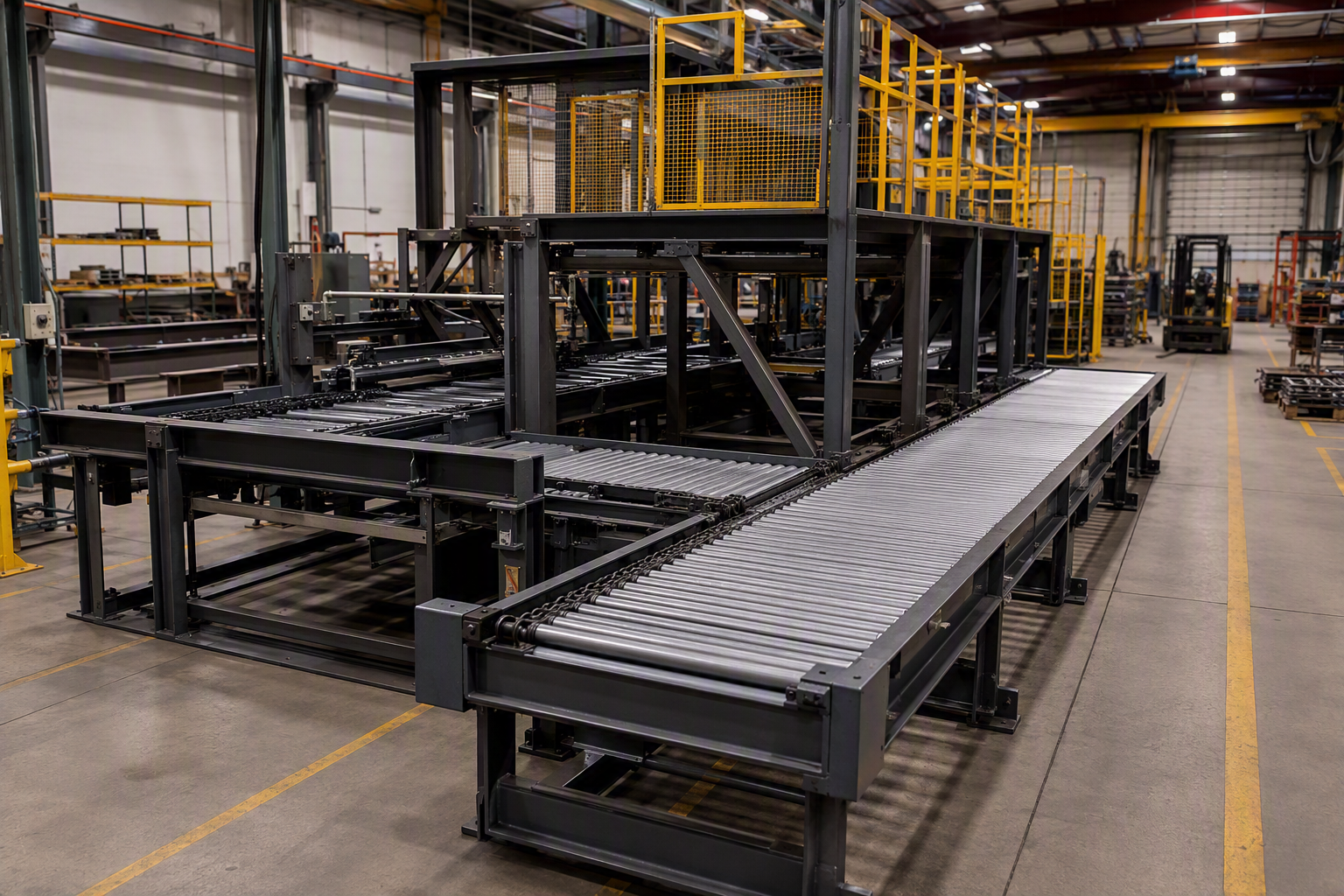
Conveyors, transfer equipment, platforms, and the steel that carries them set the pace for everything downstream in a plant. A poorly defined system can hold a whole line to the speed of its weakest handoff.
This article covers what plant managers should define before building custom material handling systems. Carbotech Manufacturing is a full-service metal fabrication shop in Roebuck, South Carolina, cutting, welding, machining, assembling, painting, and inspecting in one 14,000 square foot building.
Four Inputs to Define Before a Material Handling Build
Four inputs shape a material handling system before any drawing exists. Carbotech’s application review starts with the same four.
The product. Weight, dimensions, and how it behaves when it stops or turns. A log, a steel blank, and a packaged case load the same conveyor differently.
The rate. Volume per hour or shift, and whether it arrives steadily or in surges. Rate shapes the duty cycle, and the duty cycle shapes the structure.
The footprint. Floor space, ceiling height, columns, and aisles that must stay open.
The tie-ins. The machines upstream and downstream, with their heights, speeds, and controls.
A fabricator can quote a print, but these inputs help make sure the print fits the plant. For part-level work, what to send a metal fabricator for a quote covers the drawing side of the same question.
When does a plant need a custom conveyor rather than a standard one?
A plant needs a custom conveyor when a standard unit would need heavy modification to work. That modification usually involves the product, the rate, the footprint, or the connection to existing machinery. If a catalog conveyor already matches all four, it is often the practical choice. Carbotech Manufacturing in Roebuck, South Carolina designs and builds custom systems.
Why Structure Deserves as Much Attention as the Drive
Structure carries the load, absorbs vibration, and keeps components in alignment. According to Carbotech Manufacturing, most early conveyor failures trace to undersized structure rather than the drive.
Access is part of the same problem. When guarding sits in the path a technician needs to reach a jam, it is at risk of coming off. Carbotech’s position is that guarding and access belong in the design rather than in a change order after installation.
Material selection belongs in the same conversation. Carbotech works in aluminum, stainless steel, and mild steel. According to the shop, the choice usually comes down to the product, washdown requirements, and the operating environment.
Which of OSHA’s most cited standards apply to material handling equipment?
Three of OSHA’s 10 most frequently cited standards in its final fiscal year 2025 data, released in 2026, apply to equipment common in material handling. Lockout/tagout ranked fourth with 2,562 violations. Powered industrial trucks ranked eighth with 2,150, and machine guarding ranked tenth with 1,498. That fiscal year ran from October 2024 through September 2025.
What the OSHA Data Means for Equipment Design
OSHA publishes its list of the most frequently cited standards for fiscal year 2025 to help employers find and fix recognized hazards. OSHA released the final figures, drawn from federal inspections across all industries, in spring 2026.
For a plant planning new equipment, the pattern matters more than the counts. These standards sit inside ordinary work: clearing a jam, servicing a drive, and moving loads by forklift between stations.
Maintenance access, guarding, and forklift traffic are all design questions a plant can review on a drawing before steel is cut. Carbotech sends engineering drawings to the customer for approval. That way, issues can surface on paper rather than on the floor.
Is it better to use one vendor or several for a material handling project?
One vendor owning design, fabrication, finish, and installation removes the handoffs between separate companies. Several vendors can work when each is capable and someone manages the interfaces closely. The trade-off is coordination. Every handoff adds a schedule dependency and a point where responsibility for fit can blur.
One Building From Drawing to Installation
Carbotech keeps engineering, fabrication, assembly, and paint in one building, then installs on site. Mechanical and electrical engineers work on the same floor as the fabricators. A Mazak 510 laser cuts up to one inch thick on a five by ten foot bed. The same floor runs a Hyd-Mech saw, a Hypertherm plasma cutter, and a Piranha 60 ton ironworker.
Parts move through laser cutting services and custom metal fabrication, and the shop assembles, fits, and paints the system before shipping. For the trade-offs between cutting processes, see laser cutting vs. plasma cutting. Machines Carbotech builds carry a 12-month warranty.
Plants that need parts built to their own prints on repeat runs can use contract manufacturing. Before outsourcing that kind of work, see how to choose a contract manufacturer.
Who builds log decks and conveyors for sawmills?
Carbotech Manufacturing in Roebuck, South Carolina builds equipment for sawmills and wood processing plants. Its published work includes log decks, board transfer systems, and waste conveyors. The plant opened in 2023 as the US operation of Carbotech Group. The group has built log handling and wood processing equipment for sawing and planing mills from Quebec since 1987.
Handling Equipment for Sawmills and Wood Processing
Sawmills and planing mills move logs, boards, and residue rather than uniform parts. Each stage calls for equipment suited to the material it handles. Carbotech Group’s experience in that sector sits behind the Roebuck shop.
The same plant builds custom material handling systems for general industrial and manufacturing plants.
Frequently Asked Questions
What information does a fabricator need to quote a material handling system?
A fabricator needs the product’s weight and dimensions, the required rate, and the available footprint. Details on the equipment the system must connect to matter as well. Drawings help if they exist. At Carbotech Manufacturing, customers who bring drawings get a quote against them, and customers who bring an application get a design first.
Why does a conveyor system keep breaking down?
According to Carbotech Manufacturing, most early conveyor failures trace to undersized structure rather than the drive. Frames can deflect under load and fasteners can loosen from vibration. Workers may also remove guarding that blocks access. That is why structure, product weight, and maintenance access belong in the design inputs from the start.
Should a conveyor frame be aluminum, stainless steel, or mild steel?
Conveyor frame material depends on the product being moved, washdown requirements, and the operating environment. Carbotech Manufacturing in Roebuck, South Carolina builds handling systems in all three materials. The shop settles the choice during application review. Plate, sheet, and structural sections all run through the same shop.
Can a material handling system be designed without existing drawings?
A material handling system can start from a production problem rather than a finished print. Carbotech Manufacturing has mechanical and electrical engineers at its Roebuck plant. They develop the design and produce drawings for customer approval before fabrication begins. That way the design reflects the actual product, rate, and footprint.
Who builds custom material handling systems near Spartanburg, SC?
Carbotech Manufacturing builds custom material handling systems at 129 Old Airport Road in Roebuck, South Carolina, in Spartanburg County. The 14,000 square foot plant puts mechanical and electrical engineers on the same floor as the fabricators. The shop handles engineering, fabrication, paint, and on-site installation.
Carbotech Manufacturing: One Floor, Every Operation
Carbotech Manufacturing cuts, welds, machines, assembles, paints, and inspects in one 14,000 square foot building in Roebuck, South Carolina. The plant opened in 2023 as the US operation of Carbotech Group, which has built log handling and wood processing equipment from Quebec since 1987.
Our Services Include:
- Custom Metal Fabrication: Aluminum, stainless, and mild steel, from single pieces through repeat runs
- Material Handling Systems: Conveyors, platforms, and handling equipment designed, built, painted, and installed by one team
Have a print or a bottleneck?
Send it over with material, quantity, and the date you need parts on the ground.
This article is general industry information and is not a substitute for OSHA guidance, equipment manufacturer documentation, or a qualified engineer’s assessment of your specific application.
Related Articles
- Custom Metal Fabrication Quotes: What to Send Before Parts Get Cut
- Laser Cutting vs. Plasma Cutting: How Material and Thickness Decide
- How to Choose a Contract Manufacturer for Build-to-Print Work
Works Cited
“Top 10 Most Frequently Cited Standards.” Occupational Safety and Health Administration, U.S. Department of Labor, www.osha.gov/top10citedstandards. Accessed 15 Sept. 2026.
